By the end of August 1780, British Major Patrick Ferguson was well established in the South Carolina “backcountry” of Ninety-six (present-day Spartanburg) with close to 1,800 Tories.
Patriot units under the command of General Thomas Sumter of South Carolina, Col Elijah Clark of Georgia, and Col. Isaac Shelby of North Carolina continued to resist and attack British outposts.
After defeating the Continental Army at the Battle of Camden (16 August 1780) and winning against General Sumter at the Battle of Fishing Creek (18 August 1780), Lord Cornwallis felt the time was right to invade North Carolina. Major Ferguson was dispatched to deal with the Patriot forces in Western North Carolina.
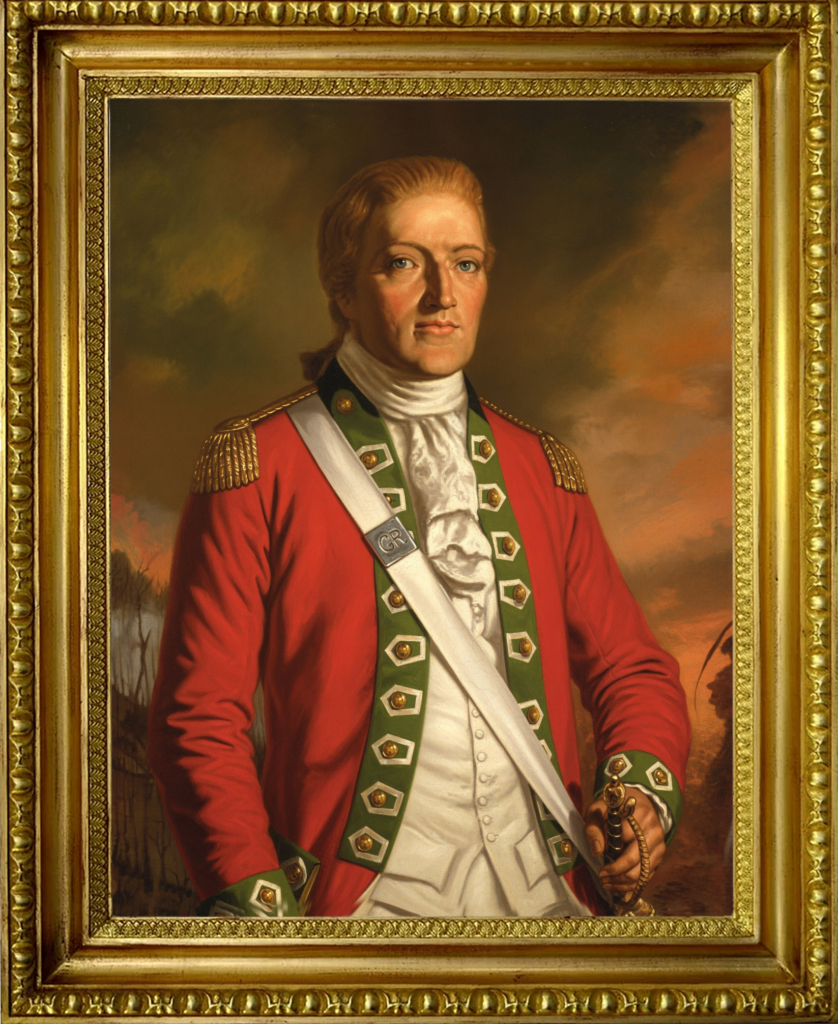
On 2 Sept 1780, Major Ferguson commanded his forces toward Western North Carolina. On 7 Sept 1780, his forces marched to Gilbert Town (present-day Rutherfordton) and set up his base of operations. Loyalist Lt. Alexander Chesney kept a journal of his experiences while riding with Major Ferguson’s force.
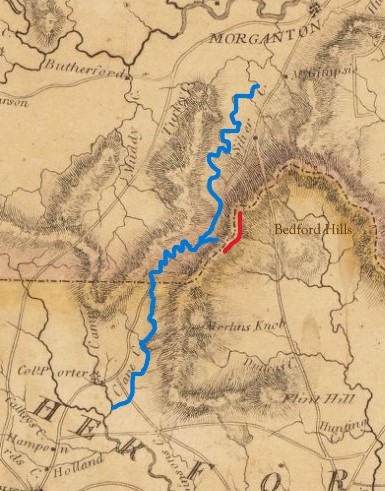
Lt. Chesney carries on his narrative, “…soon afterwards got intelligence that Col. McDole [McDowell] was encamped on Cane and Silver Creeks, on which we marched toward the enemy, crossed the winding creek 23 times found the rebels strongly posted toward the head of it toward the mountain…”
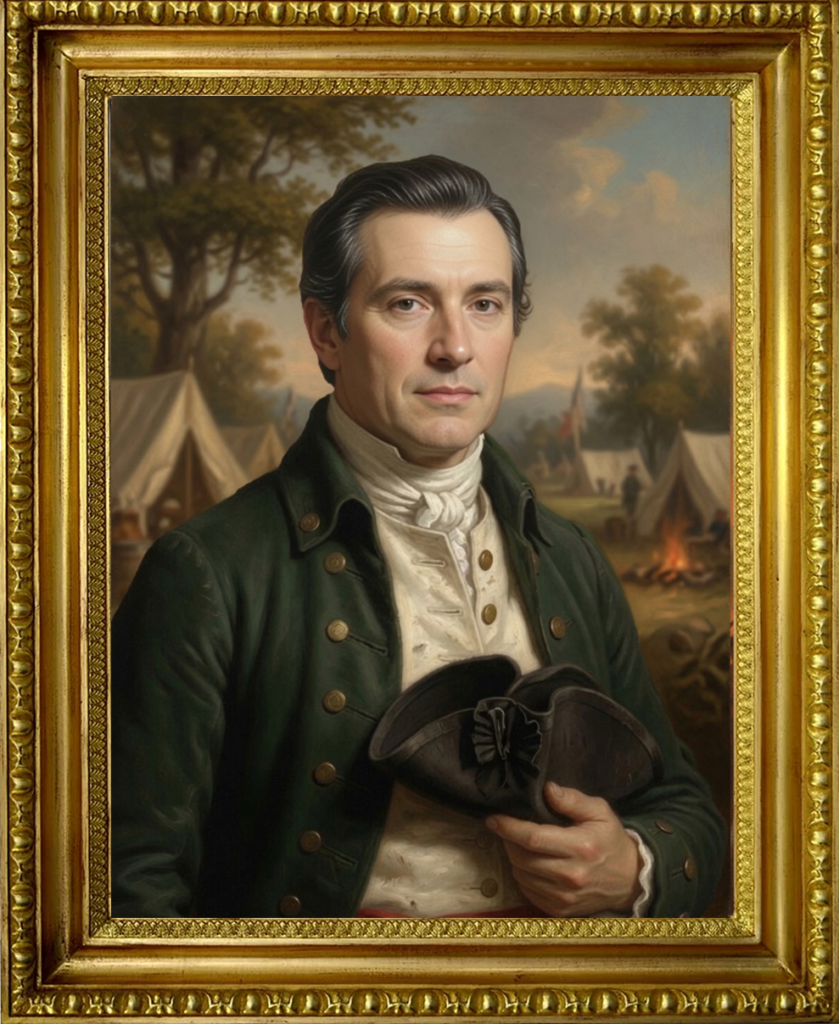
Charles McDowell had been active in the Cherokee Wars. He was Captain in the 2nd Rowan County Regiment of the Militia (1775-1776) and then was a LT. Colonel in the same Regiment (1776-1777).
Charles McDowell also served in the state senate of the North Carolina House of Commons in 1777 and 1778.
In 1777, when Burke County was formed from Rowan County, he led the newly formed Burke County Militia.
His new Militia participated in several skirmishes in South Carolina including victories at Earle’s Ford on 15 July 1780, Wofford’s Iron Works on 8 August, and Musgrove’s Mill on 19 August.
Colonel McDowell had been riding his militia along the Broad River towards the Watauga settlements on the far side of the Appalachians and encamped in the foothills near a pass at the head of Cane Creek, approximately 14 miles from Gilbert Town.
On 11 September 1780, Tory scouts informed Major Ferguson of Colonel McDowell’s close presence. Major Ferguson left Gilbert Town at two in the morning on the 12th, hoping to surprise the militia leader while he was still in camp.
Major Ferguson mounted forty American Volunteers and one hundred militia. He would later write that McDowell’s militia numbered 220 whereas Volunteer dragoon Lt. Anthony Allaire put the rebel number at 300.
Capt. Dunlop and Col. McDowell met Two months earlier….
Capt. James Dunlop led the advance party as they rode towards the mountains. Scouts informed Colonel McDowell that Ferguson’s men were approaching. The Patriot leader laid an ambush at Cane Creek Ford and positioned his militia on a hill that “was a small round elevation about a quarter of a mile from the base of the South Mountain then covered with timber and surrounded by a soft swamp.” As Captain Dunlop’s dragoons approached, a small party of rebels exposed themselves and the partisans pursued.
Accordingly, Dunlop’s men fell back at first from the initial assault and firefight. Lt Allaire wrote that after descending the hill, the patriots soon after raced back up to form, appearing to the lieutenant that they had meant to challenge the crown forces.
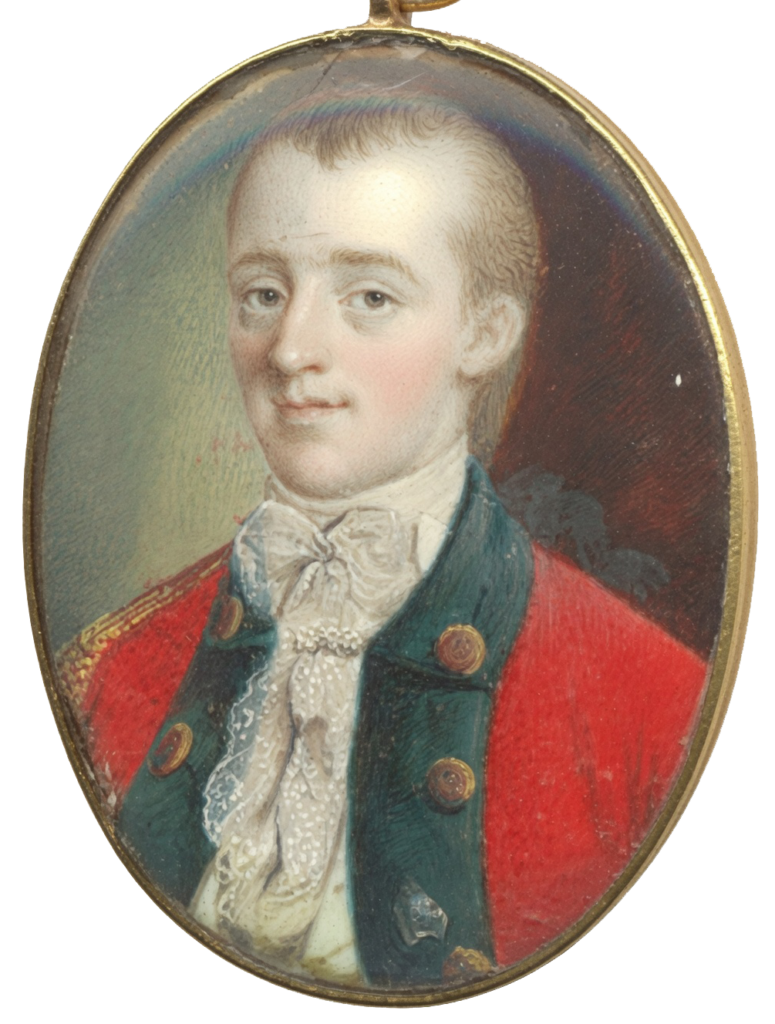
Dragoon Lt. Anthony Allaire recorded “We totally routed them killed one private, wounded a Capt. White, took seventeen prisoners, twelve horses, all their ammunition, which was only twenty pounds of powder, after which we marched to their encampment and found it abandoned by those Congress heroes. Our loss was two wounded and one killed. Among the wounded was Capt. Dunlap, who received two slight wounds.
Captain Dunlop’s wounds to his hips were serious and kept him out of action for some months.
Cane Creek was important!!
In this insignificant victory, Ferguson witnessed McDowell’s militia retreating to safety over the mountains and out of his reach. This caused him to reach the erroneous and fatal conclusion that the resistance to the Crown in western North Carolina was at an end.
Once word of the fleeing patriot militia spread among the settlements, Ferguson’s recruiting efforts improved. Buoyed by this increase of fighters, he wrote to Cornwallis that the Tory militia gained confidence each day from their small offensive operations, while assessing the surrounding rebels as “utterly dismay’d.”
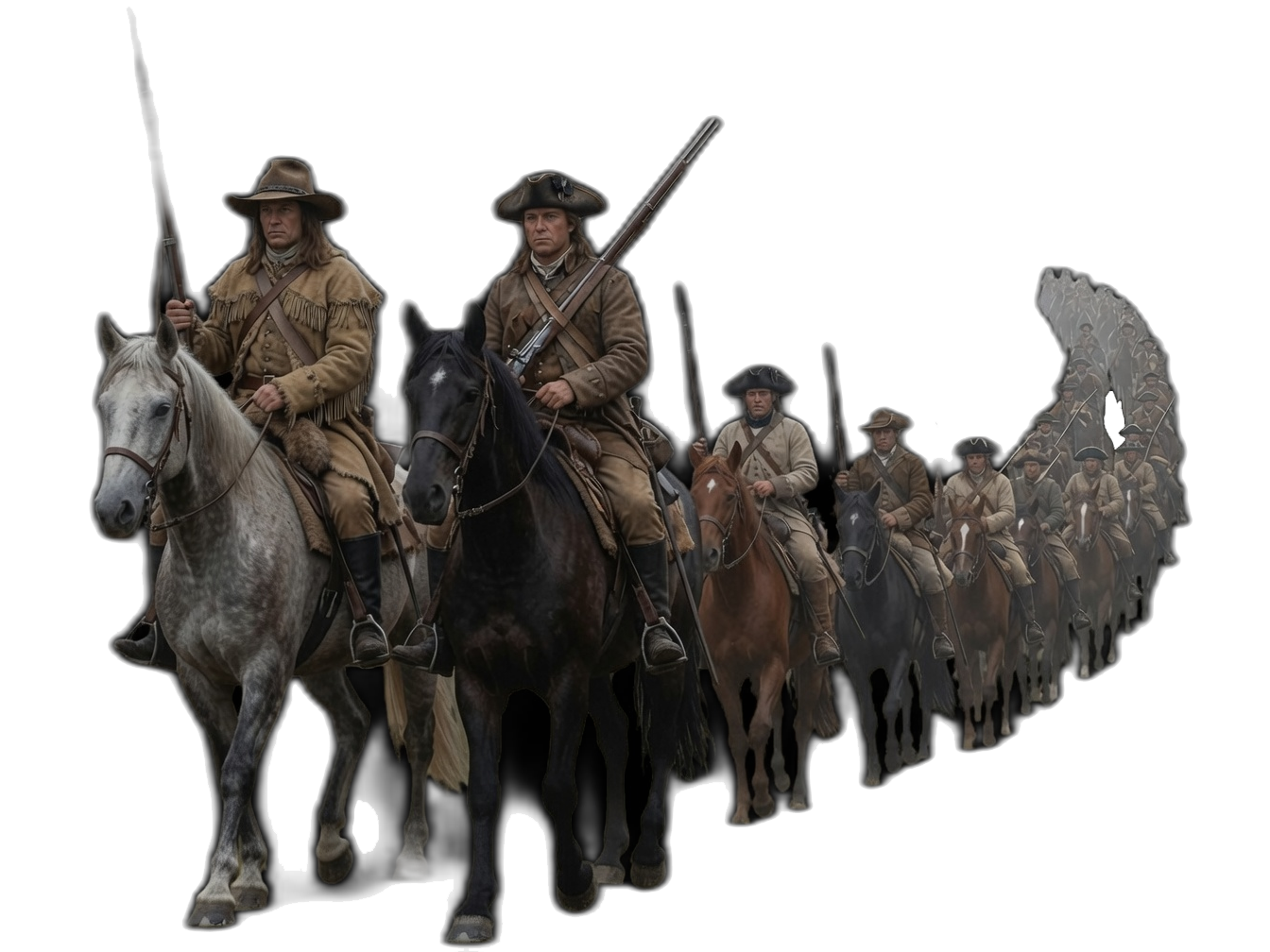
Seven days after the fighting at Cane Creek, Ferguson’s scouts reported 800 ‘over the mountain men’ mustering under Colonel Isaac Shelby in the Watauga, Nolichucky, and Holston river valley settlements in present-day eastern Tennessee.
Though faced with this unsettling news, Ferguson held to his belief in the exaggeration of the Patriot strength, evidenced in the recent action at Cane Creek. He shrugged the threat from the far west, expressing disbelief that barely 300 wilderness rabble would cross the mountainous paths to confront him.
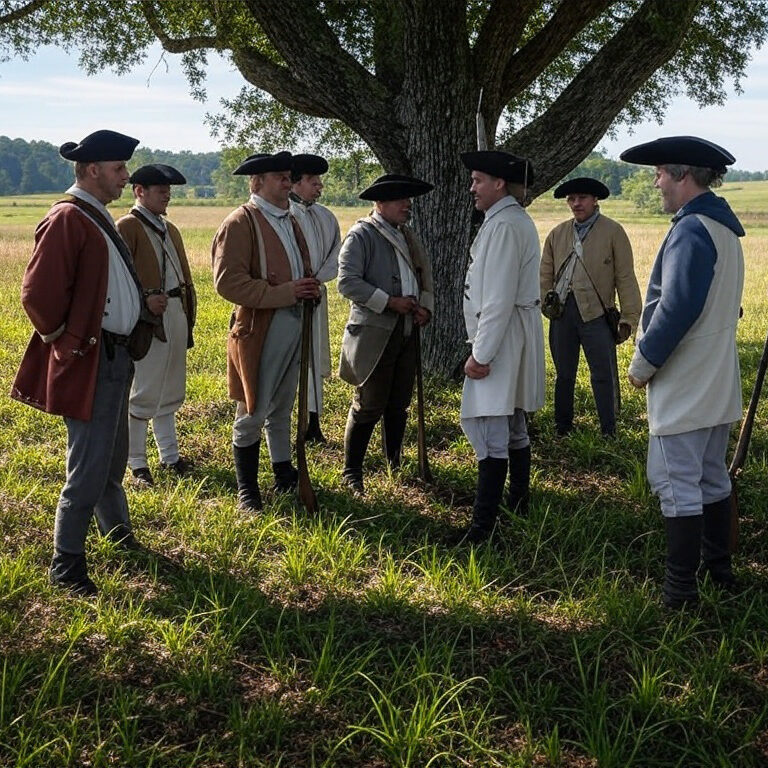
Less than three weeks after this engagement, roughly 1,400 militiamen had returned to Burke County and were encamped near the site of the battle. Patriot Militia Commanders met under an Oak tree (now referred to as the Council Oak) on the Quaker Meadows plantation to determine the best course of action to attack Ferguson.
Patriot Militia Commanders including Colonel Isaac Shelby, Lieutenant Colonel John Sevier, Colonel Benjamin Cleveland, Major Joseph Winston, and local hosts Colonel Charles McDowell and Major Joseph McDowell.
On October 7, 1780, the American Survivors of the Cane Creek Battle were among the 900 Patriots at the Battle of King’s Mountain. Major Ferguson’s entire command was decimated; killed, wounded, or captured.